
Shelbyville Previous Resident Sources
Start a Shelbyville address history with the newest reliable identifier, then choose the source that fits the period. The assessor and GIS card are strongest for the present parcel. Recorder records extend the ownership chain. Directories, census schedules, maps, newspapers, and cemetery evidence add household and address context. The table shows both the useful years and the limits found in local research.
| Source | Years It Covers | Where Held | What It Shows |
|---|---|---|---|
| Recorder deed books and index | 1822-June 1998 books; May 1998-current web index, with a conflicting January 1998 computer note | Recorder, Doxpop, office terminal, microfilm | Grantor, grantee, instrument, date, legal description; cutoff must be verified |
| Assessor and WTH card | Current card; sales disclosures since January 2000 | XSoft and WTH GIS | Owner, situs, mailing, parcel, legal description, transfer clues; not proof of occupancy |
| City directories | 1860-61, 1892-93, 1911-12, 1916-24, selected Polk 1936-2015 | SCPL, State Library, microfilm and library databases | Named occupants, addresses, occupations; gaps and reverse sections vary |
| Federal census | Public through 1950 under the 72-year rule | NARA and library databases | Household, age, relationship, occupation, ward or township |
| Sanborn maps | 1887, 1893, 1898, 1905, 1910, 1916, 1926 and later | Library of Congress and State Library | House number, footprint, use, material, adjoining property |
| Newspapers and obituaries | Newspapers from 1853; obituary books 1850-present | SCPL, Omeka, library databases | Family, death, event address, and move clues |
| Forest Hill cemetery | Microfilm 1884-1978; partial online records | State Library, SCPL, FamilySearch | Interment, age, residence, cause and funeral details |
For a recent question, begin with the property card and deed. For a mid-century household, choose a directory close to a census year. For a nineteenth-century trail, deed books, early court and probate microfilm, newspapers, cemetery permits, and maps are more useful than a modern street search.
Fix the Shelbyville Parcel First
The modern parcel anchors all later work. Search Shelby County XSoft with at least three characters from an owner, address, or property number, then select the proper suggestion. Save the situs address, owner mailing address, parcel, parent parcel, legal description, township, district, neighborhood, transfer rows, and any sales-disclosure date. Situs is the assessor's physical property address. It is not always where the owner receives mail.
Next, place the parcel in WTH GIS. The map accepts an address, intersection, parcel, owner, or other text and allows nearby parcels and boundary layers to be inspected. A visible transfer row is still only a lead. Recorded title should be confirmed through the Auditor and Recorder.
The sample county card separates 1821 N Knightstown Road from the owner's Lawndale Drive mailing address. It also preserves a parcel, parent parcel, transfer entries, Addison Township, a school district, and a section-township-range legal description. Those fields make it possible to recognize the same land after a street form changes.
Trace Shelby County Deeds Backward
A deed chain follows the legal land transfer, not just a street number. Use the newest owner and legal description from the property card. Then search the Shelby County Doxpop index for that owner's purchase. The seller on one deed becomes the person to search as buyer on the prior deed. Keep dates, instrument numbers, book/page references, parcels, and legal descriptions in a simple log.
- Copy the current owner, parcel, legal description, situs address, and latest transfer date from the property card.
- Find that owner's acquisition deed by searching the owner as grantee or party. Match the date and legal description, not the surname alone.
- Record the seller, then search that seller as grantee in the next older purchase. Repeat one transfer at a time.
- When a parcel splits or combines, use plats, surveys, parent tracts, easements, and section-township-range wording.
- At the web cutoff, move to the Recorder's terminal, deed index books, or microfilm. Older copies require manual office work.
- Grantor and grantee
- The grantor transfers the interest; the grantee receives it.
- Chain of title
- The linked series of recorded transfers for the same land.
- Legal description
- The land wording that identifies the tract more reliably than a changeable street address.
- Criss-cross directory
- A directory arranged by address or telephone number. A complete Shelbyville title and year run was not confirmed.
The county describes deed index books from 1822 through June 1998 and online documents from May 1998 onward. Its copy sheet instead says January 1998 onward is available by computer. Ask the Recorder which route applies.
Open the grantor-grantee recorded-document search for the online segment.
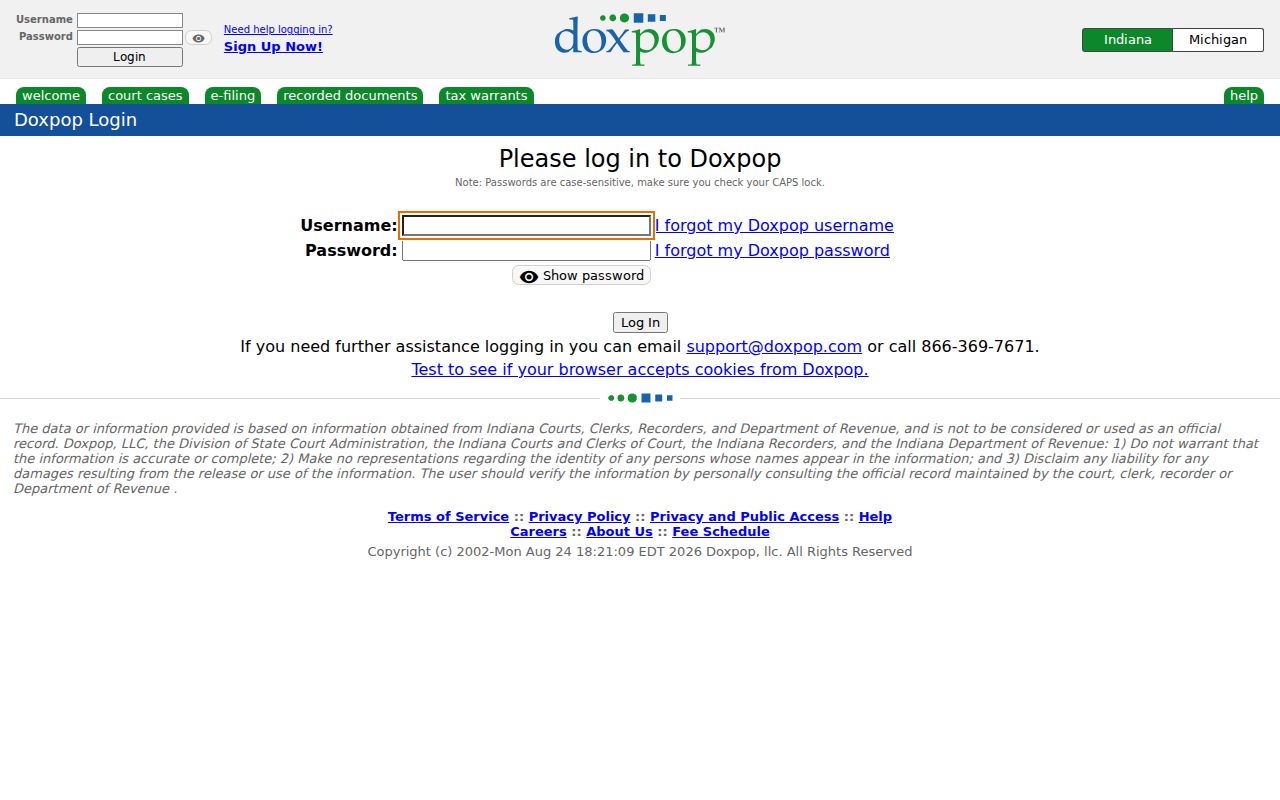
The interface is a finding aid. The Recorder's permanent record and certified copy remain the official sources.
Shelbyville House History Help
The Shelbyville-Shelby County Public Library Genealogy and History Department can bridge the point where parcel databases stop. Its holdings include directories, telephone books, plat maps, newspapers, obituary books, census tools, cemetery records, and databases. A dedicated online house-history guide was not found, but staff offer room access and research help.
The research request asks for the person, family, or place, what is known, and the fact needed. The service costs $5 plus 10 cents per page and postage. Give exact street forms, a year range, the parcel or legal description, and names already tied to the site.
Review the Shelbyville library research request before sending an address question.
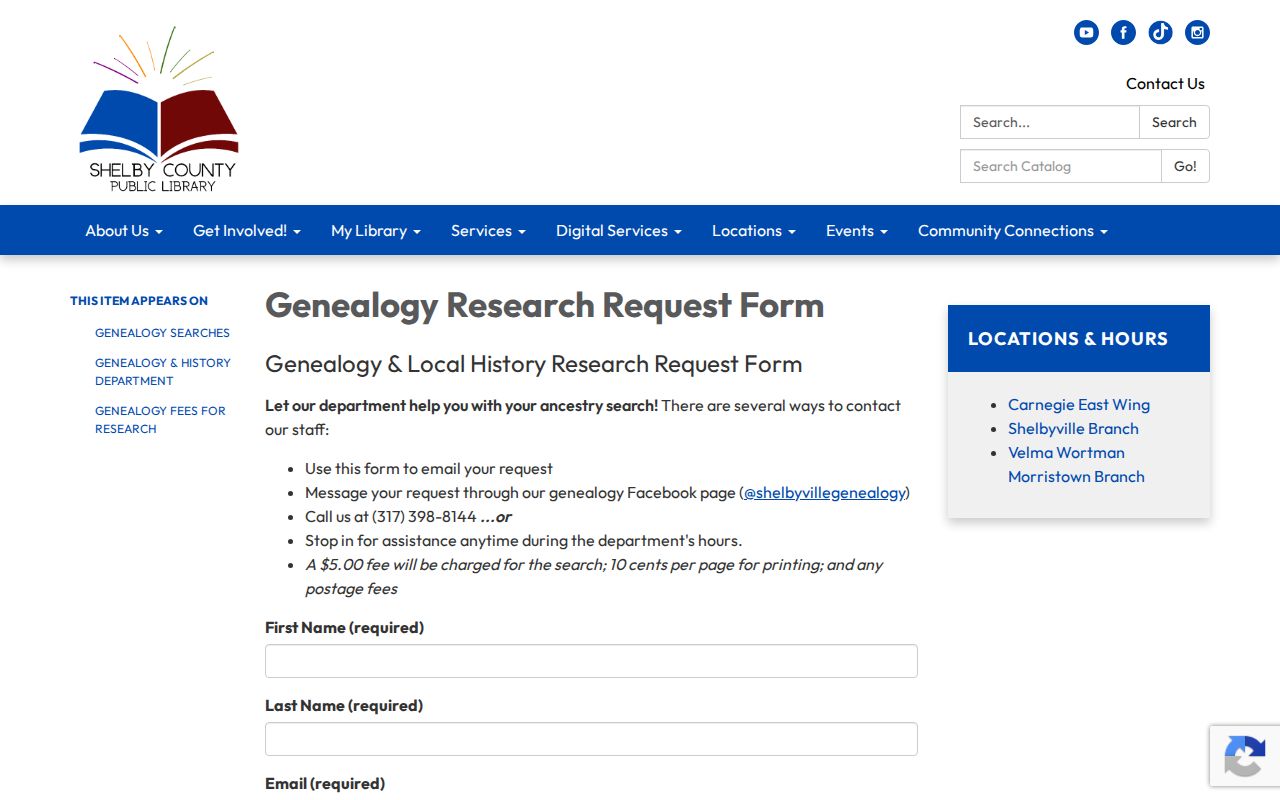
The form lets staff compare several local collections instead of searching a bare surname.
Note: Ask staff whether a specific directory volume has a reverse address section before treating it as a criss-cross source.
Sanborn Maps Preserve Shelbyville Addresses
Sanborn fire-insurance maps test whether an old address points to the same structure or lot. Shelbyville editions are listed for 1887, 1893, 1898, 1905, 1910, 1916, 1926, and later series. They show house and block numbers, footprints, use, construction material, street width, and nearby property lines.
The Library of Congress Shelbyville Sanborn collection can be paired with a directory or census year. Compare the block and footprint to the current parcel, then check a plat, legal description, or later map before asserting continuity.
No complete Shelbyville street-renumbering chronology was located. State Library rural delivery, ward, precinct, and road-numbering maps, plus 9-1-1/MSAG address records, can help when the name or number changes. An APRA request may seek an existing assignment record by address and date.
A Shelbyville Resident in 1887
Forest Hill cemetery permit 104 shows how an address trail can end in a personal local record. The April 1887 permit identifies an Elizabeth Street resident and records a cemetery lot and section, interment time, age, cause, and funeral details. It is evidence for one deceased person, not a roll of everyone at that home.
Forest Hill microfilm covers 1884 through 1978, with partial online access. Pair a permit with a death record, obituary, directory entry, probate file, and deed or tax record. Combined dates can show that the same person occupied the address, died, and left an estate trail.
A survivor named in an obituary may have lived elsewhere. An heir named in probate did not necessarily occupy the inherited property.
End a Shelbyville Address Trail
A backward trail often stops because a deed changes form, a parcel splits, or a resident disappears between editions. Do not fill that gap with a guess. Ask the Assessor or Auditor for the exact transfer date and parent-parcel relationship, then take those details to the Shelby County Recorder. The county's local route is Assessor first, Auditor second, Recorder third.
The Recorder at 25 W Polk Street keeps permanent instruments and can prepare official copies. Current online records are convenient, but Doxpop is third-party and not the official record. Older copies require an in-office manual search. The State Library microfilm inventory adds early deeds, court books, probate, settled estates, guardianships, marriages, naturalizations, and cemetery material.
Death and estate sources can identify why ownership changed. An obituary may name a spouse or survivor. Probate can name heirs. A cemetery permit may preserve the last residence. None of those facts alone proves that the named heir or relative lived at the old address. Preserve the record date and the role each name played.
Pair Shelbyville Household Records
Owners are only part of the story of previous residents. A city directory can place a named householder at an address in one publication year. A census can name the household, ages, relationships, occupations, and ward or township. Newspapers and obituaries can explain a death, move, family link, or later address. Details about publishers and shelves are kept on the Shelbyville city directory page.
Use a repeatable process:
- Choose the directory year nearest a public census and copy the entry exactly, including abbreviations and street form.
- Find the census household using the surname, ward or township, nearby households, and address when available.
- Compare spouse, children, occupation, age, and neighbors. Mark conflicts instead of forcing a match.
- Move to prior and later directory years, then use obituaries, cemetery permits, probate, or deeds to explain the change.
The earliest official run found is McEvoy's 1860-61 volume, with later runs in 1892-93, 1911-12, 1916-24, and selected Polk years from 1936 to 2015. A missing year or absent reverse section must be stated plainly.
Lawful use. Research previous residents for Shelbyville house history, genealogy, heirs, and personal curiosity. Never use these records to track, harass, intimidate, or harm a living person.
Close each link with the best record available. A deed confirms a transfer. A directory records a dated occupant entry. A census describes a household. A certified vital or court record may confirm the event itself.