
Shelbyville City Directory Context
Shelbyville's record base begins well before the earliest directory run found. Shelby County was organized in 1821, and the county-seat site was selected in 1822 at the Little Blue and Big Blue river confluence. Early court, probate, marriage, naturalization, and land books carry names through the decades before city directories. WPA indexes later made many births, deaths, and marriages from the nineteenth and early twentieth centuries easier to locate.
Industry helps explain work terms printed beside residents. Official sources describe Shelbyville as the Furniture Capital of the Midwest by the late nineteenth century and count more than twenty-one furniture factories from 1900 to 1940. That setting helps interpret a trade in a city directory, but it does not prove that a named person worked at one plant. The entry and edition remain the evidence.
Newspapers begin in local library holdings in 1853, while obituary books reach back to 1850. Search by surname and date, then compare the street, relatives, cemetery, age, and occupation with the directory listing. Variant spelling matters because local families arrived from Ohio, Pennsylvania, the Carolinas, Virginia, and Kentucky. Keep conflicting dates as source-specific facts until an original record resolves them.
The Indiana State Library microfilm guide widens that early search. Its Shelby County holdings include selected court, probate, naturalization, marriage, deed, birth, death, cemetery, and WPA index material. These sources can explain why a city directory listing first appears or vanishes. A marriage may establish a new surname. Probate may identify heirs after a death. A deed may keep the same family tied to an address during a missing directory year. Use each index as a pointer, then record the original custodian and citation.
Forest Hill Cemetery records offer a local bridge. State Library microfilm covers 1884 through 1978, while online routes are partial. One surviving permit from April 1887 records an Elizabeth Street residence with the lot, section, age, cause, and funeral details. That example shows how cemetery evidence can place a former Shelbyville resident near a directory year. It remains an interment record, not proof that every named person shared the address.
Shelbyville City Directory Runs
The Indiana State Library directory guide is the best year inventory found for Shelbyville. It identifies publishers and repositories, but a missing year is not proof that no edition was printed. Confirm a volume before travel because it may sit at the State Library, the local genealogy room, on microfilm, or in a licensed database.
| Collection | Years found | Where held | Access |
|---|---|---|---|
| McEvoy multi-city directory | 1860-1861 | State Library guide | Verify copy |
| City Directory and County Gazetteer | 1892-1893 | History collections | Verify shelf or scan |
| Caldwell City/Rural | 1911-1912 | Microfilm and databases | Library |
| W.H. Hoffman | 1922, 1924 | Microfilm and databases | Library |
| Polk | Selected years, 1936-2015 | State and local guides | Mixed |
| Farm Journal and Haines | 1916-1921; many 1988-2013 | State Library | Verify edition |
Polk forms the longest run, though many years are absent. Regional and farm books widen a search beyond the city, so they are not pure Shelbyville resident rolls. Telephone books at the library can add a dated address or number when a city directory year is missing.
Shelbyville Directory Research Room
The Shelbyville-Shelby County Public Library Genealogy & History Department, 33 W Broadway, holds noncirculating material and supports copies, microfilm, and online printing. Hours are 9 a.m. to 9 p.m. Monday through Thursday, 9 a.m. to 7 p.m. Friday, and 9 a.m. to 5 p.m. Saturday. Call 317-398-8144 to confirm a year.
Holdings include census records, family and county histories, newspapers from 1853, phone books, plat maps, yearbooks, church and military records, obituary books from 1850 onward, and cemetery files. In-library Ancestry and Newspapers.com access and the FamilySearch affiliate connection can bridge a name to another source.
See the genealogy room collections before a visit.
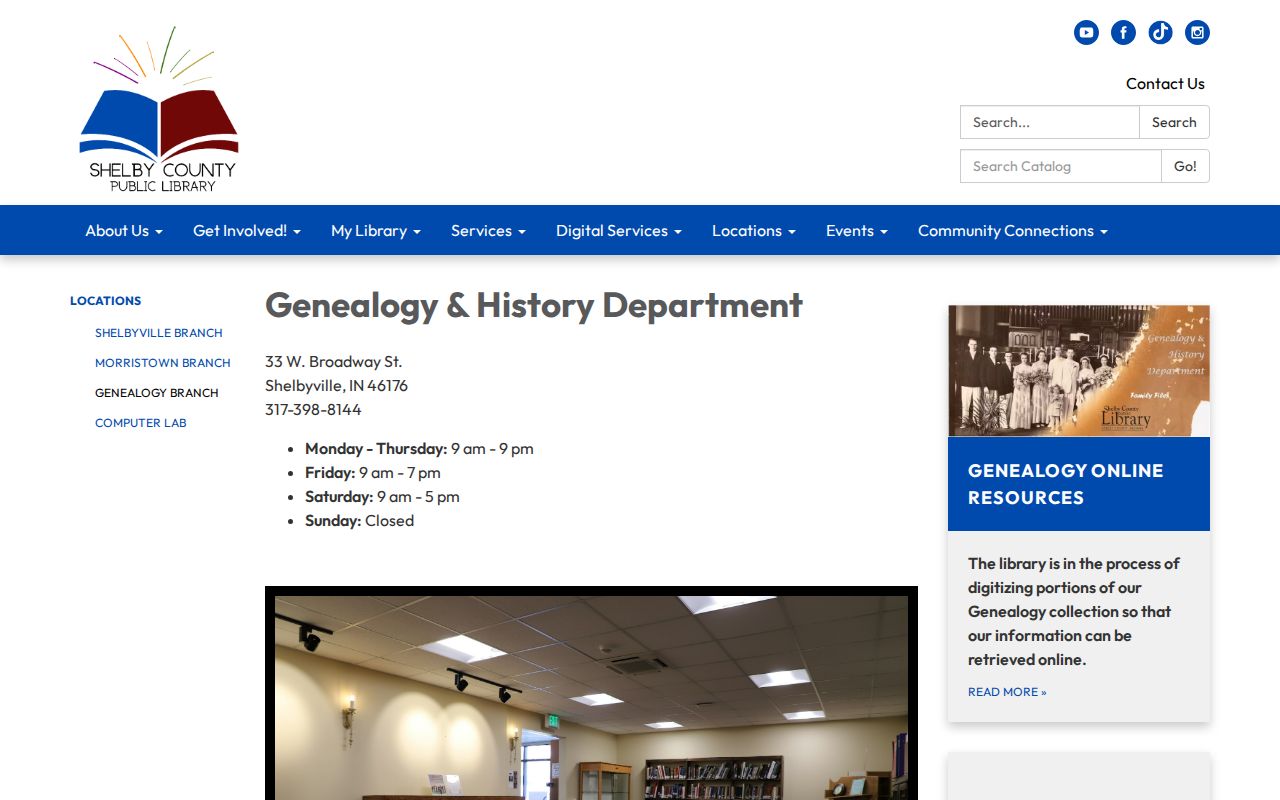
The page confirms that city directories belong to a larger local-history set, letting a researcher cross-check a name in one room.
Digital Shelbyville Directory Clues
The library Omeka collection offers keyword, Boolean, exact-match, item, file, and collection searches. The research crawl found roughly 4,554 records or items, including family files, obituaries, clippings, and Shelbyville News material. Copyright and privacy limits keep some living-person material offline.
Search the digitized Shelby family files before requesting a folder.
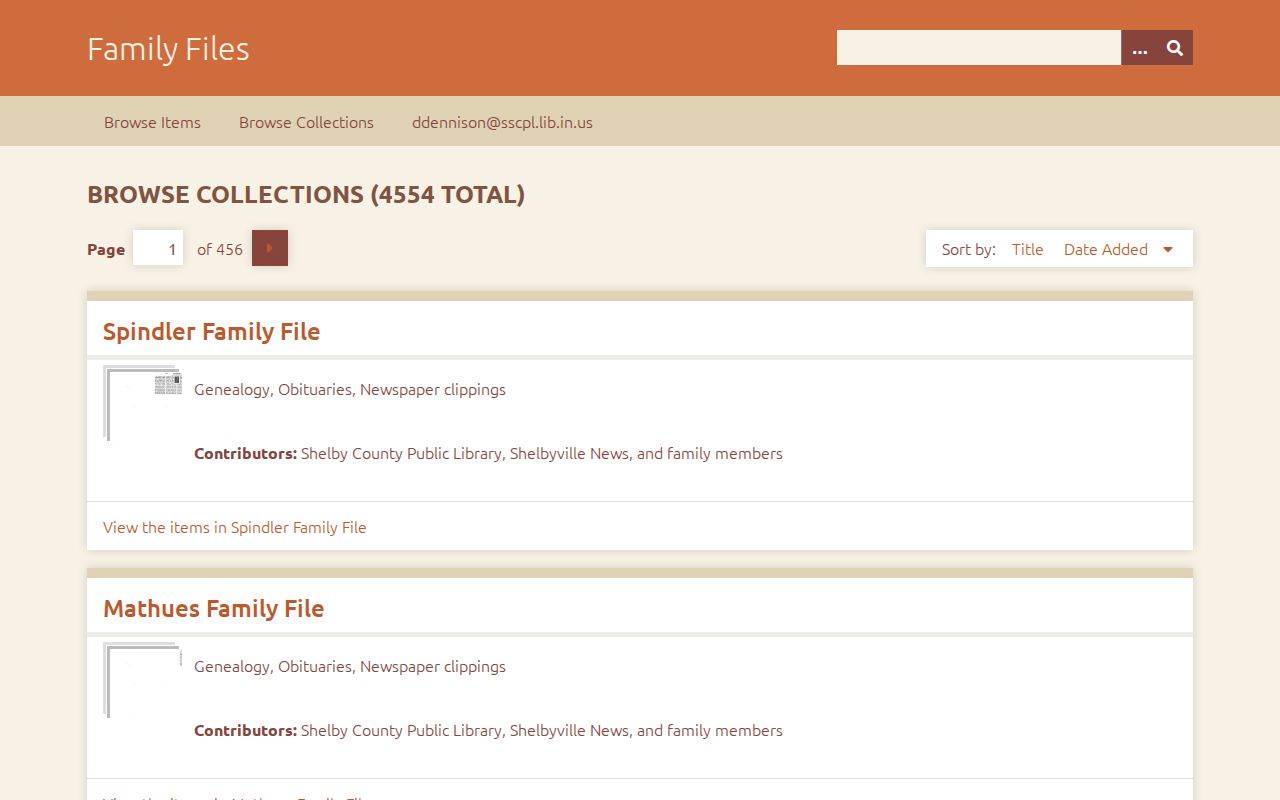
A digital description may point back to an original clipping, folder, or directory at the library.
The Indiana Memory print collection adds histories, maps, newspapers, and a City of Shelbyville 1895 item. That work is a civic and business snapshot, not a present resident roll.
Browse the historical print collection and save title, year, page, and repository.
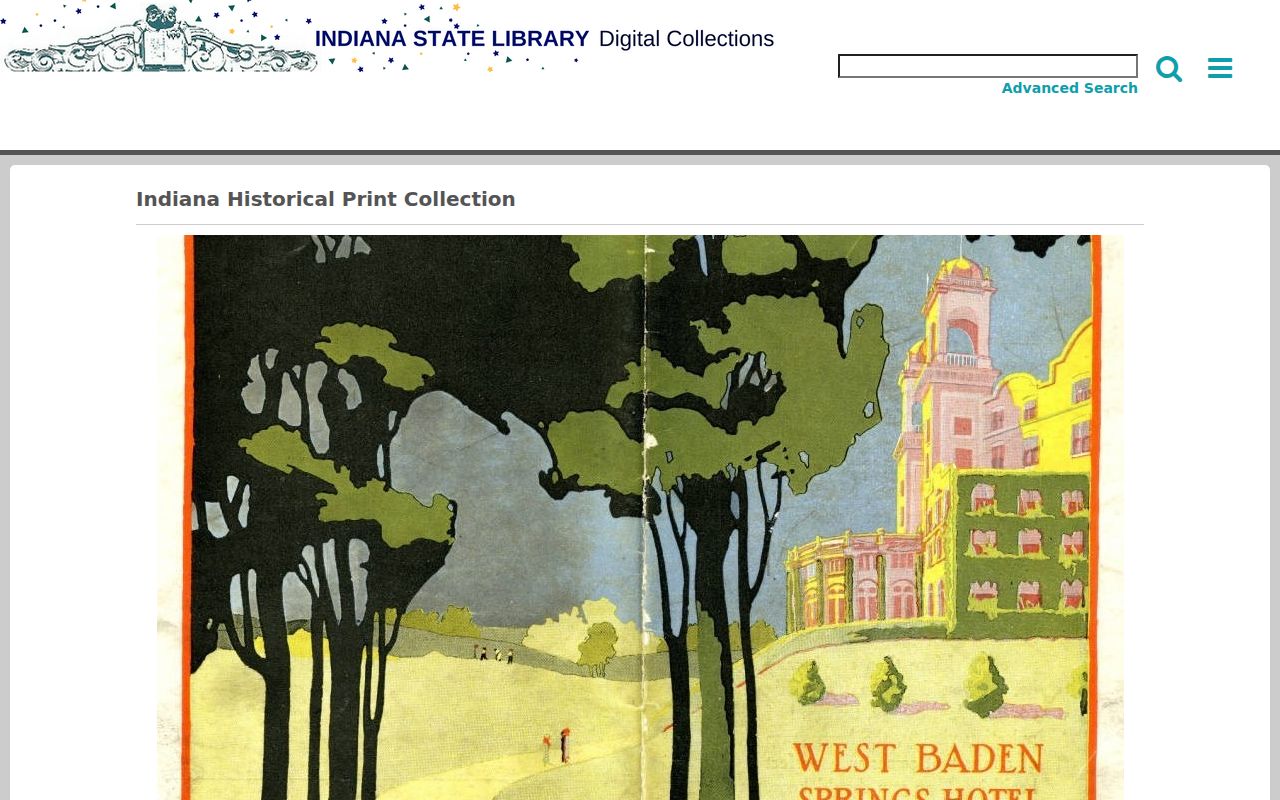
Page context reveals whether a name belongs to a household entry, advertisement, or civic list.
Reading Shelbyville Directory Entries
Inspect the real volume before expanding any abbreviation. No stable Shelbyville page was opened during research, so the sound method is to capture only fields actually printed and photograph that edition's key.
| Printed name | Exact surname, given name, and initial |
|---|---|
| Household detail | Spouse, widow mark, or count when printed |
| Work detail | Dated occupation or business |
| Place | Street, number, room, or rural route |
| Citation | Year, publisher, page, and cross-reference |
Do not assume an unfamiliar letter means owner, renter, roomer, or boarder. Publishers changed codes. A phone book can add an exchange, while a business section may place the same surname in an advertisement.
- Criss-cross directory
- An address-first section arranged by street or phone number.
- Householder index
- An index centered on the listed household name, not every occupant.
- Abbreviation key
- The edition's list defining shortened streets, trades, and marks.
Shelbyville Directory Time Line
The printed trail overlaps several eras of public records, which helps fill breaks between volumes.
| Year | Milestone |
|---|---|
| 1822 | County books begin near Shelbyville's founding era. |
| 1860-1861 | Earliest official-guide directory run found. |
| 1882-1920 | WPA birth and death indexes bridge early and modern files. |
| 1936-2015 | Selected Polk years form the longest modern run. |
| 1950 | Latest public federal decennial census at research time. |
This does not claim a first or last printed directory. Neither was proved. It shows where directory evidence can meet census, vital, newspaper, court, and cemetery sources.
Trace Shelbyville Families by Year
Start with an exact name, address, and target year. Directory evidence is a dated snapshot, so move one edition at a time and note every variation. Pair it with the nearest public census and compare nearby household names.
- Record the spelling, page, address, publisher, and year.
- Check the prior and next editions, noting moves, spouse marks, work changes, and gaps without guessing.
- Use an address-first section if the actual edition has one.
- Compare census households, then test relationships in marriage, obituary, and cemetery sources.
- Use deeds or assessor files to separate ownership from occupancy.
A listing can vanish after a move, death, spelling change, or choice not to list. Obituaries, newspapers, cemetery registers, marriage records, and probate can distinguish those outcomes. For current address work, use the Shelbyville street directory.
Shelbyville Cemetery Family Clues
A Forest Hill permit from April 1887 shows how another record can restore detail behind a short city directory entry. It gives an Elizabeth Street residence, lot and section, interment time, age, cause, and funeral fields. State Library microfilm covers Forest Hill from 1884 through 1978; library and FamilySearch routes add access.
A directory can place a person on a street, while the cemetery register ties the name to a date and burial place. Obituary books and newspapers can add relationships. None proves a whole household alone.
Grover Center Shelbyville Context
The Grover Center, home of the Shelby County Historical Society, is at 52 W Broadway. It is free and open Wednesday through Saturday, 10 a.m. to 4 p.m.; phone 317-392-4634. Streets of Old Shelby and Building Shelby County exhibits give context for trades and addresses in city directories.
Review Grover Center information before asking about a family or business.
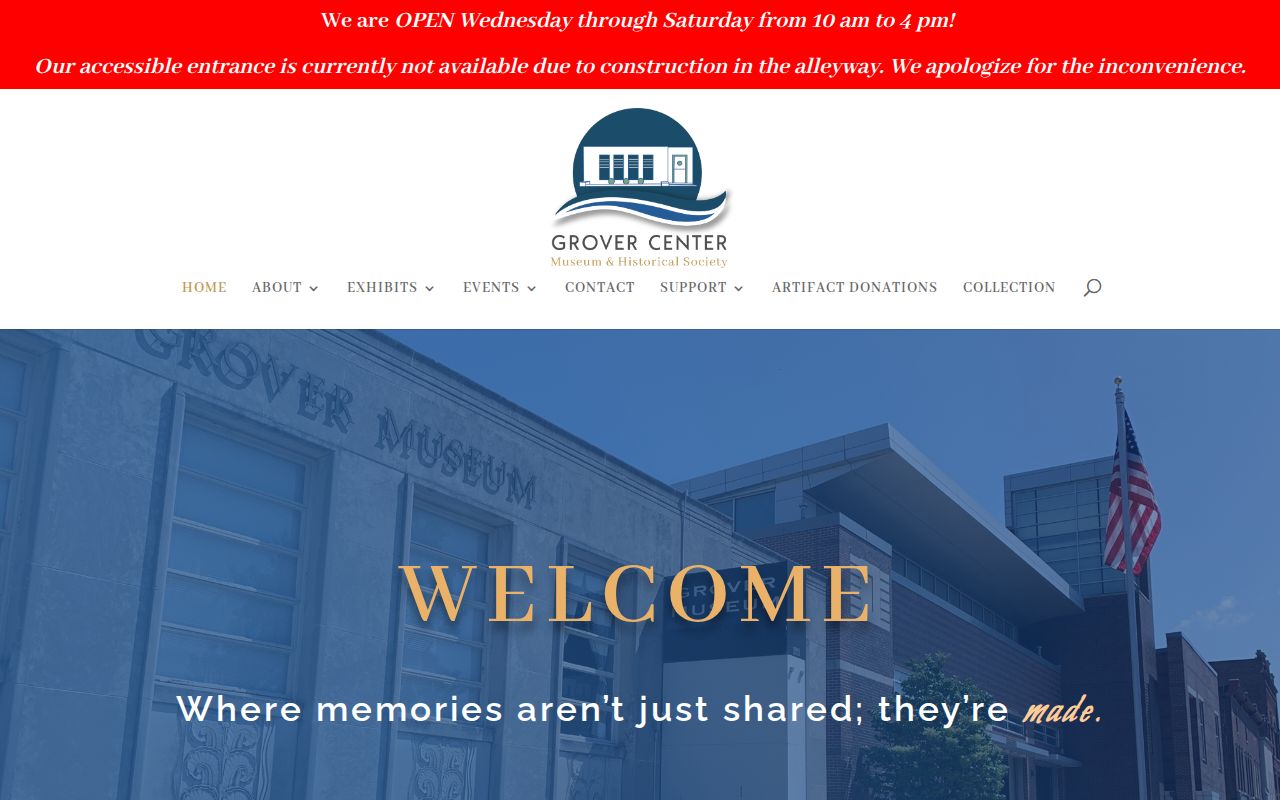
No complete public name index was found. A surname, street, business, and date range makes a stronger request.
Request Shelbyville Directory Research
Remote researchers can use the library's genealogy request form. The fee is $5, plus 10 cents per page and postage. No completion time was stated. Supply names, dates, places, record types, relationships, and the exact question.
View the research request form before submitting.
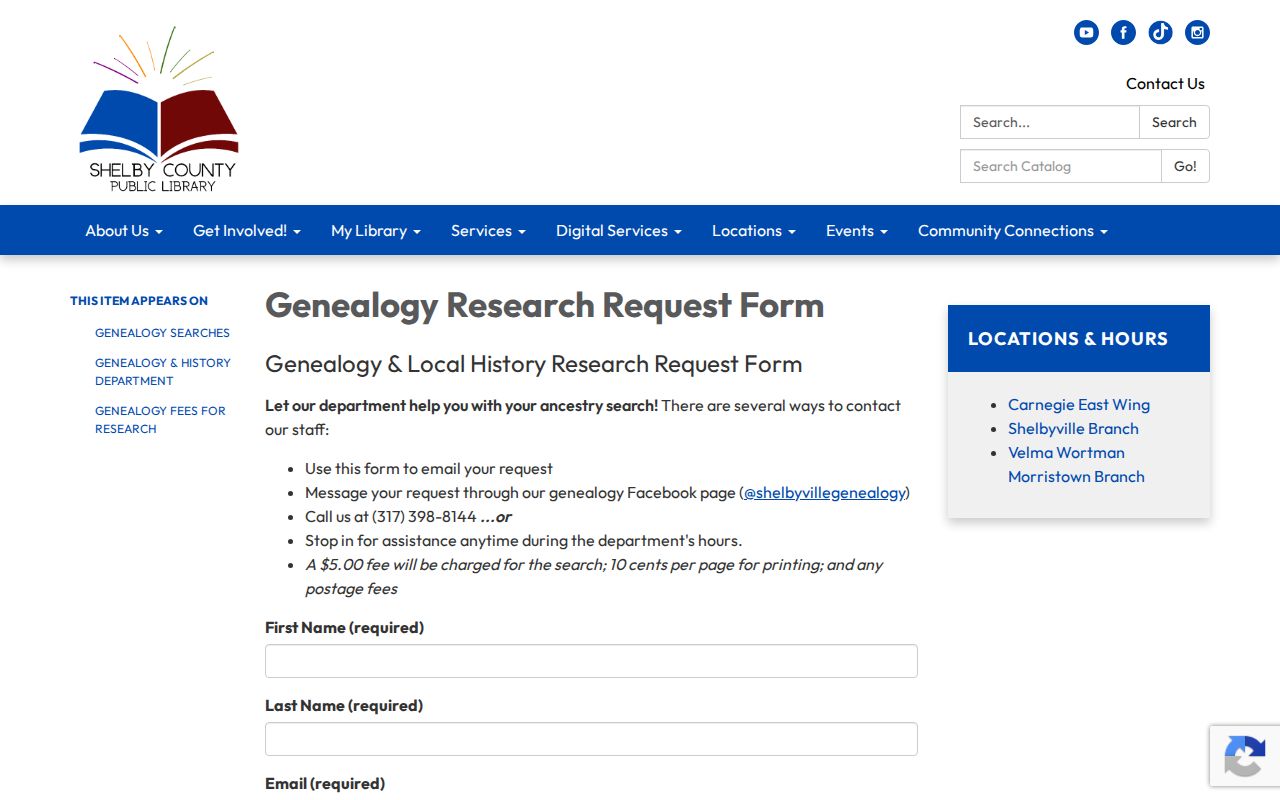
The form is the fallback when an edition is not online. Ask which years and sources were checked even if no entry appears. For early books and microfilm, also consult the State Library Shelby County guide.
Give staff an exact edition or a narrow year range when possible. Include variant surnames, a known street, spouse, trade, and the sources already searched. A focused request lets the researcher check the directory shelf, phone books, obituary volumes, newspapers, plat maps, and family files without repeating work. Save the negative result too, since it documents which Shelbyville city directory years were actually examined.